
Why Tipaza Is Important
Tipaza is important because it shows how different civilisations shaped the same coastal settlement over centuries, from Punic trading activity to Roman urban development, Christian monuments, Byzantine remains and indigenous North African heritage connected to the wider Mauretanian world.
Where the Ruins Are Located
The archaeological site is located around 70 kilometres west of Algiers, making Tipaza one of the most accessible UNESCO heritage excursions for travellers staying in the capital, the Mitidja region or Algeria’s central Mediterranean coast.
Tipaza and Its Coastal Setting
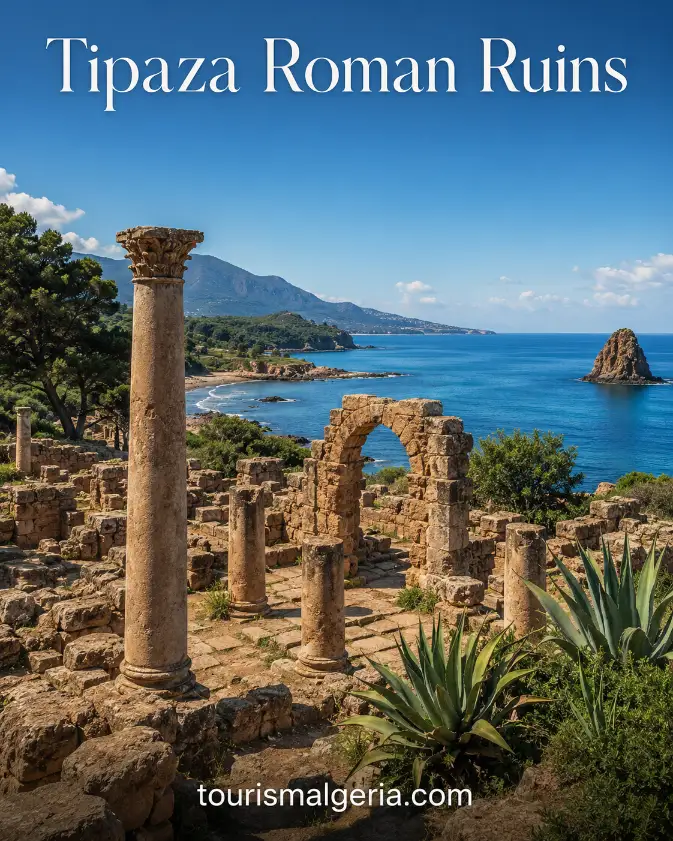
Unlike inland Roman sites such as Timgad or Djemila, Tipaza is remarkable because its ruins sit directly beside the sea, where stone streets, columns, basilica remains and ancient walls face blue water, cliffs and Mediterranean vegetation.
Roman and Punic Heritage in Tipaza
The site reflects an older Punic foundation later transformed under Roman rule, which makes it especially valuable for understanding how maritime trade, colonisation, urban planning and local North African traditions interacted along the Algerian coast.
The UNESCO Value of Tipaza
UNESCO recognises Tipaza as a serial property made up of two archaeological parks near the modern town and the Royal Mauritanian Mausoleum, also known as Kbor er Roumia, located inland from the coast.
What Visitors Can See in Tipaza
Visitors can explore Roman streets, basilicas, tombs, theatre remains, baths, forum areas, columns, mosaics, coastal paths and archaeological fragments spread across a landscape where ruins, sea views and greenery create a very strong visual experience.
Basilicas and Early Christian Remains
Tipaza is especially interesting for its early Christian monuments, including basilica remains and religious structures that show how the city continued to develop after the classical Roman period and became part of North Africa’s Christian heritage.
Roman Streets, Baths and Public Areas
The visible urban remains help visitors imagine daily life in ancient Tipasa, including movement through streets, social life in baths, commercial activity, religious practice and public gathering spaces connected to the city’s Roman identity.
The Royal Mauritanian Mausoleum
The Royal Mauritanian Mausoleum near Tipaza is an essential companion site because it links the archaeological landscape to the ancient Kingdom of Mauretania and shows that the region’s heritage is not only Roman but also deeply indigenous and royal.
Tipaza as a Day Trip from Algiers
Tipaza is one of the best heritage day trips from Algiers because travellers can combine archaeology, sea views, photography, seafood restaurants, coastal walking and the Royal Mauritanian Mausoleum in a single itinerary from the capital.
Best Time to Visit Tipaza
The best time to visit Tipaza is usually spring or autumn, when temperatures are comfortable for walking through open ruins, photographing the coast and exploring the archaeological parks without the strongest summer heat or busiest holiday crowds.
How Long to Spend at the Site
A proper visit can take several hours, especially if travellers want to walk slowly through the ruins, enjoy the sea views, visit both archaeological areas, understand the basilicas and include the nearby mausoleum in the same trip.
Practical Travel Base for Tipaza
Algiers is the most practical base for visiting Tipaza, while the town itself can also be included in a wider coastal itinerary covering Cherchell, Mount Chenoua, beaches, seafood restaurants and central Algeria’s Mediterranean heritage.
Main Highlights of the Tipaza Ruins
- Roman Archaeological Park
The main archaeological park contains streets, columns, walls, basilica remains and coastal ruins that show the scale of the ancient settlement. - Mediterranean Sea Views
The sea-facing position makes Tipaza one of Algeria’s most beautiful archaeological sites, combining ancient stone remains with cliffs, vegetation and blue water. - Early Christian Basilicas
The basilicas are among the most important remains at Tipaza and show the religious transformation of the city after the Roman classical period. - Punic and Roman Layers
The site is valuable because it preserves traces of different historical phases, including Punic, Roman, early Christian and Byzantine influences. - Ancient Streets and Urban Remains
The stone streets and foundations help visitors understand the organisation of the ancient city and its relationship with the sea. - Theatre and Public Buildings
The remains of public spaces reveal how entertainment, civic life and urban culture developed within the Roman settlement. - Baths and Domestic Spaces
Baths and house remains give insight into everyday life, social habits and comfort in a Mediterranean Roman city. - Royal Mauritanian Mausoleum
This nearby monument adds royal North African history to the visit and makes the wider Tipaza heritage area more complete. - Coastal Walking Routes
Walking through Tipaza is part of the experience because the ruins are spread across a natural coastal setting rather than confined to a closed urban block. - Photography and Cultural Tourism
Tipaza is ideal for photography because columns, ruins, sea, hills and light combine to create one of the most memorable heritage landscapes in Algeria.
How to Use This Page Before Visiting Tipaza
Travellers should use this guide to plan transport from Algiers, walking time, photography, weather preparation, mausoleum access, coastal routes, guide options and the main monuments to prioritise during a visit to Algeria’s Mediterranean Roman heritage.
Tipaza Roman Ruins and the Pleasure of a Slow Coastal Walk
The Tipaza Roman ruins reward visitors who walk without a strict schedule. Paths wind between pines, wild plants and stone foundations, and the sea appears and disappears between the remains. A relaxed pace lets you notice sounds such as waves, birds and wind in the trees, which add to the sense of a place that has been quiet for centuries.
Tipaza Roman Ruins and the Writers Who Loved Them
The site has long inspired literature and painting, partly because of the meeting of stone, sea and light. Reading a short passage by a writer who knew this coast before your visit can sharpen your attention to scent, colour and atmosphere. It encourages you to look at the ruins as part of a living landscape rather than a museum exhibit.
Tipaza Roman Ruins: What to Pack and Wear
- Comfortable shoes for uneven stone and sandy paths.
- A hat, sunscreen and plenty of water for open stretches.
- A light jacket, since sea breezes can feel cool in the shade.
Tipaza Roman Ruins and Respectful Behaviour
Stay on marked routes, avoid sitting on ancient walls and never remove stones or tiles. Because the ruins sit close to cliffs and the shore, keep a safe distance from edges and watch children carefully. Photographing local people should always follow a polite request.
Common Mistakes at the Tipaza Roman Ruins
Many visitors plan a very tight day and spend most of it in traffic. Others assume the site is entirely flat, then struggle with slopes in the wrong footwear. A further mistake is leaving too little time for questions to a guide, who can turn the Tipaza Roman ruins from pretty scenery into a readable story.