
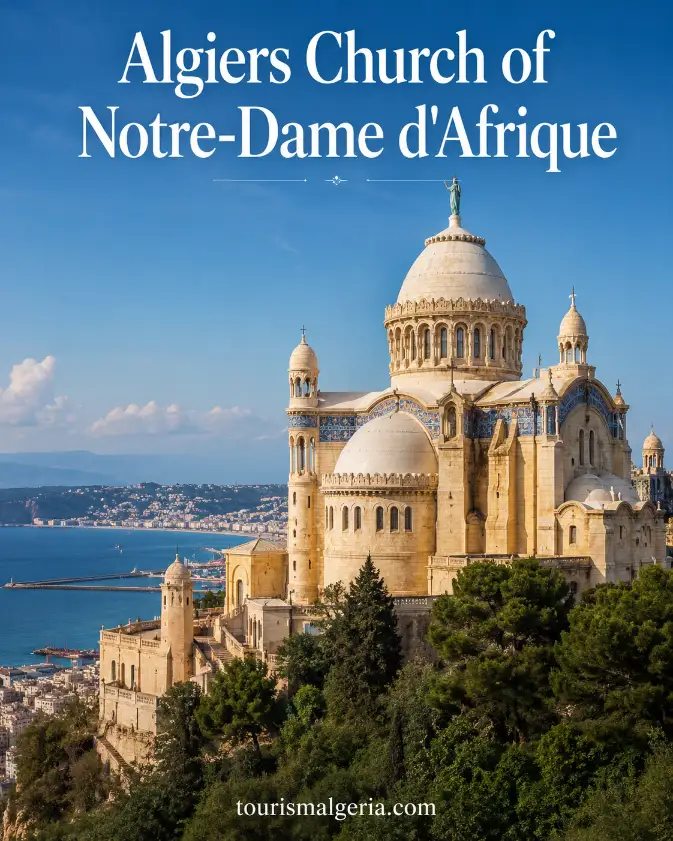
Meaning of Notre Dame d’Afrique
Notre Dame d’Afrique means Our Lady of Africa, referring to the Marian devotion connected with the basilica, while the building itself has become a symbol of spiritual memory, Mediterranean openness and interreligious sensitivity within Algiers, especially because of its famous message of prayer for Christians and Muslims.
History of the Basilica
The basilica belongs to the nineteenth-century religious and architectural history of Algiers, with construction linked to the French colonial period, Archbishop Charles Lavigerie and Catholic devotion, while today it is visited not only as a church, but also as a cultural and architectural monument.
Architecture and Style
The architecture of Notre Dame d’Afrique is often described through its Neo-Byzantine character, rounded domes, cream-coloured stone, mosaic bands, arched openings, towers and strong silhouette above the bay, giving the basilica a visual identity that differs from both central Algiers and the Casbah.
Interior and Religious Atmosphere
Inside the basilica, visitors can experience a calm religious space with stained glass, devotional objects, altar areas, quiet prayer corners and decorative details, making the visit different from a simple viewpoint stop because the building still functions as a place of worship and reflection.
Views Over Algiers
One of the strongest reasons to visit Notre Dame d’Afrique is the view over Algiers, the Mediterranean Sea and the surrounding hillside districts, which makes the basilica especially attractive for photography, city orientation and travellers wanting a calmer panorama above the capital.
How to Visit Notre Dame d’Afrique
Visitors should check current opening hours before going, because religious services, holidays, group visits or exceptional closures may affect access, while official visiting windows are usually limited to specific periods during the day, making planning more important than for open public squares.
Best Time to Visit
The best time to visit is usually morning or late afternoon, when light is better for photography and temperatures are more comfortable, especially outside winter, while midday visits can still work if travellers mainly want a short interior visit and panoramic stop.
How to Reach the Basilica
Notre Dame d’Afrique can be reached by car, taxi, organised tour or local transport depending on the visitor’s starting point, but the hilltop position means travellers should plan access carefully, especially if combining the basilica with the Casbah, Bab El Oued or central Algiers.
What to Combine With the Visit
A visit to the basilica combines well with Bab El Oued, the Algiers seafront, the Casbah, Notre Dame d’Afrique viewpoints and central city sightseeing, creating a route that links religious heritage, Mediterranean panoramas, old urban quarters and modern capital life.
Visitor Etiquette
Because Notre Dame d’Afrique is an active religious site, visitors should behave respectfully, dress appropriately, avoid loud conversations, ask before filming formal content, follow staff instructions and separate normal tourist photography from behaviour that could disturb prayer, ceremonies or the spiritual atmosphere.
Common Mistakes to Avoid
Common mistakes include arriving without checking opening times, treating the basilica only as a photo backdrop, underestimating the hilltop access, missing the interior, visiting too quickly or failing to combine the stop with nearby districts that explain its relationship with Algiers.
Service Providers and Organisations Related to Notre Dame d’Afrique
- Basilica Notre Dame d’Afrique — official visitor, contact and religious information: https://notre-dame-afrique.org/
- Licensed local guides in Algiers — useful for explaining history, architecture and religious context.
- Algerian tour agencies — useful for combining the basilica with the Casbah and city panoramas.
- Hotel concierges in Algiers — useful for arranging transport, taxis and short guided visits.
- Cultural heritage platforms — useful for architectural background and preservation information.
- Tourism information services in Algiers — useful for practical route planning and visitor orientation.
Notre Dame d’Afrique and the Hill of Bologhine
Notre Dame d’Afrique stands on a headland at the north-western edge of the capital, in a district that falls steeply toward the water. The setting matters: the basilica was built to be seen from the sea and from the bay, and the walk or drive up the slope forms the first chapter of the visit. Travellers who treat the climb as part of the experience, instead of a transfer problem, usually come away with a better sense of how the city relates to its coastline.
Reading the Inscriptions and Symbols at Notre Dame d’Afrique
The apse and interior carry lettering and images that reward a close look. Among the best known is the prayer on behalf of both Christians and Muslims, which gives Notre Dame d’Afrique a reputation as a place of shared respect. A visitor who slows down and reads the inscriptions, notices the statue of the Virgin and observes the devotional objects will learn more about the local Catholic community and its relationship with the city than from the façade alone.
Notre Dame d’Afrique and Early Christianity in North Africa
The history of Christianity in Algeria is much older than the basilica. Roman-era cities such as Hippo, now Annaba, and Tipasa belong to a Christian past that includes the figure of Augustine, one of the most influential thinkers of the early church. Placing Notre Dame d’Afrique in this longer story helps visitors avoid reading the building only as a colonial-era monument and shows why the Mediterranean coast has long been a meeting ground of religions and cultures.
Weather, Wind and Sea Light at Notre Dame d’Afrique
On the exposed headland, conditions can change quickly. Sea breezes cool the terrace in warm months, while haze may soften the view across the bay and low cloud can hide the horizon in winter. A clear, calm morning usually gives the sharpest panorama, but variable weather also creates dramatic skies over the water. Carry a light layer, sunglasses and water, and keep some flexibility so that a visit can move to another hour if visibility is poor.
Notre Dame d’Afrique for Pilgrims, Families and Curious Travellers
Different visitors look for different things. Pilgrims and worshippers seek quiet and a chance to pray; families often value the open view and the sense of space; architecture enthusiasts focus on the domes, mosaics and proportions; first-time visitors to Algiers may simply want a calm viewpoint. Each of these motives is welcome, provided that visitors remain aware that the basilica is first of all a place of worship.
Questions to Ask Before Going to Notre Dame d’Afrique
- Is the basilica open to visitors at the planned time?
- What is the easiest way to arrive and to leave the hill?
- Are there areas where photographs are not welcome?
- Which nearby places make a sensible stop before or after?
Notre Dame d'Afrique Algiers: planning transport both ways
For Notre Dame d'Afrique Algiers, think about the return journey as carefully as the way up. The basilica stands on a steep hillside above the sea, so ask your hotel or driver where taxis can be found. Visitors to Notre Dame d'Afrique Algiers can easily linger at the viewpoint.
Notre Dame d'Afrique Algiers for photographers and quiet visitors
Ask permission before photographing worshippers, and keep your voice low inside. Early or late light flatters the stone and the bay, so Notre Dame d'Afrique Algiers suits flexible schedules. Carry a light layer for wind.